








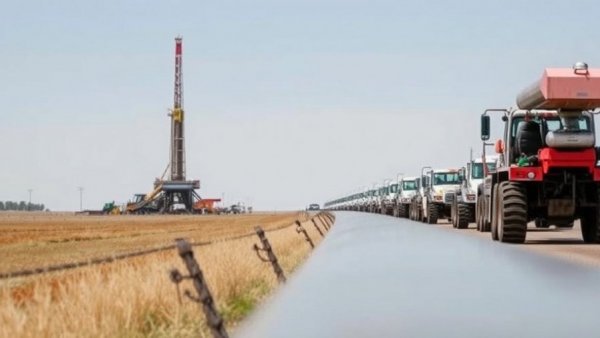
North Dakota Strikes Back: Docker Trucking Out Crude Amid Pipeline Outage
In a significant turn of events, North Dakota oil producers are adapting to a prolonged outage of an Enbridge-operated pipeline by shifting to truck transport for their Bakken crude oil. This emergency measure is essential as the ongoing disruption threatens to hinder production for many drillers in the region.
Jeremy Irwin, the global crude lead for Energy Aspects Ltd, recently described the situation, stating, "Some producers and marketers are trucking out production to delivery points on the Dakota Access Pipeline." He continued to express concerns about storage capacity, highlighting that many tanks are filling up faster than trucks can evacuate. This bottleneck in logistics could lead to possible shut-ins of production, which might undermine the progress the state has made in its oil production efforts.
Understanding the Background of the Pipeline Disruption
The current situation stems from a contamination issue when a surge in reports of tainted crude prompted Enbridge to implement rigorous tests for organic chlorides, a corrosive substance. As Irwin explained, "The chemical compounds can corrode equipment, potentially forcing refiners to shut down operations." This has raised concerns across the industry, with Enbridge still working to return the system to normal since it has been operating at reduced capacity. No specific timeline for the restart has been provided, leaving oil producers in a precarious position.
What’s Next for North Dakota’s Oil Producers?
The implications of this pipeline outage are significant not just for producers but also for the larger oil market. At least two Midwest refiners have already declared force majeure, temporarily suspending acceptance of Bakken crude deliveries due to contamination concerns. As concerns continue, refiners are rapidly seeking alternative supplies. Irwin noted that the disruption will likely accelerate drawdowns at the storage hub in Cushing, Oklahoma, an essential pricing center for benchmark West Texas Intermediate crude futures.
This situation is a stark reminder of the challenges faced in the oil industry and the ripple effects that come from infrastructure failures. With producers now relying on truck transport to navigate their way through this crisis, the value of logistics management has never been clearer. Oil companies that can quickly adapt will likely thrive amid the current turbulence.
The Broader Impact of the Outage
This incident not only emphasizes the delicate nature of pipeline operations but also highlights the importance of having backup systems in place. As North Dakota drillers pivot to trucking, there’s a pressing need to discuss the future of the state’s oil transportation strategies.
In addition, there lies an opportunity for growth in logistics technologies. Innovations in transportation and tracking for oil and other resources can help safeguard against potential disruptions, ensuring that production remains steady even when unexpected challenges arise.
Engaging with the Future of North Dakota Oil Transportation
As this situation unfolds, it’s crucial for stakeholders—from producers to those involved in logistics—to stay informed about future updates from Enbridge and consider strategic adjustments to avoid similar crises. The lesson here is clear: flexibility in operations and effective contingency planning are essential in maintaining productivity.
In conclusion, the adaptation strategies employed by North Dakota oil producers provide valuable insights into the industry’s resilience. The current landscape presents both challenges and opportunities. By embracing innovations and flexibly adapting their operations, these producers can sustain their standing in the critical oil market, even against unforeseen obstacles.





Write A Comment